After months of gradual aggression from the Russian military along the Ukrainian border, President Vladimir Putin made a speech on the morning of February 24 in which he announced his decision to launch a “special military operation.” The Russian Air Force simultaneously began a bombing campaign over Ukraine. Before dawn, Russian forces moved in by sea, air, and land from the North, South, and East of the country. Immediately following the first bombing runs, Russian Naval Special Forces made amphibeous landings on the beaches of Odessa and Azov, while Russian Spetznaz and Airborne divisions, as well as infantry and armored divisions, moved in from the north and the east. Missile attacks and bombing runs continued throughout the day, mostly targeting military institutions, but also many civilian buildings. Since the beginning of the war, both sides have been fighting for control of the sky, as gaining control would provide a massive turning point in the war, especially because it has been a fairly balanced war so far.
In the initial invasion of Ukraine, the Russian Air Force looked like they were about to completely dominate the war and take strong control of Ukrainian airspace.
However, as the Russians launched cruise and ballistic missiles from their motherland in an attempt to cripple Ukrainian air bases and air defense systems, many missiles were either shot down, or simply missed their target. As Russian soldiers made their way into Ukraine, air assault and paratroopers seized airports throughout the Eastern portion of the nation, most notably the Hostomel airport just outside of Kyiv. Russia was still able to grasp what appeared to be firm control of the airspace, to the point where retired US Navy commander Ward Carroll said “if they fly, they die,” when speaking of Ukrainian jets. While it had appeared that Russia would take quick control, a sudden surge of resistance from the Ukrainian people and armed forces turned the tide of the conflict. Companies of Ukrainian Spetsnaz and infantry conducted fixed-position assaults on the airports that Russian paratroopers held and were very successful, forcing the Russian troops to retreat. The tide of the battle for the sky has been significantly impacted by the heroism from the Ukrainians, in addition to the large amount of tactical aid that has been provided by NATO countries. Some highlights of the aid packages sent to Ukraine include TB2 drones, switchblade kamikaze drones, and AA Stinger missiles. Additionally, the USA is sending SA-8 tactical short-ranged missiles that were secretly acquired during the breakup of the Soviet Union.
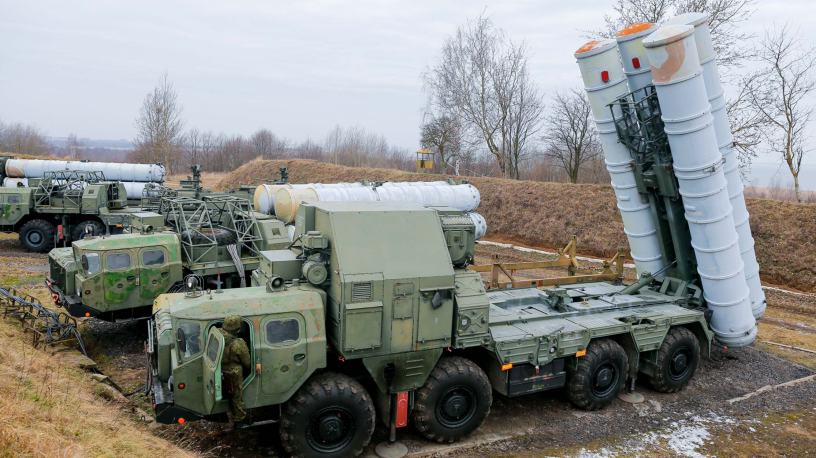
Moreover, the biggest impact in terms of missile defense could come from Slovakia, as they may be able to provide a long ranged missile defense system, the S300 missile. However, whether Slovakia can provide the missile to Ukraine remains unclear, as they would have to be compensated by other NATO nations, most likely the US, in order to maintain their own national security. If the US were to compensate Slovakia, they would deploy the MIM-104 Patriot system, which would require US operators to train the Slovakians.
While there has been a great amount of air-related support from NATO nations, many have called for NATO to establish a no-fly zone over Ukraine. This is because in order for a no fly zone to be enforced, the US Air Force would essentially have to shoot down Russian jets, pitting the two sides in direct combat and leading to a possible world war.

