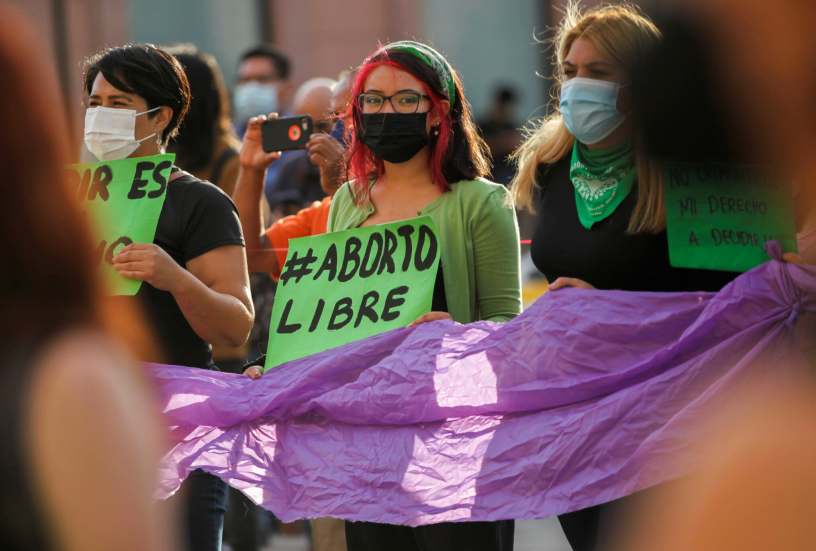
On September 7, 2021 Mexico’s Supreme Court voted unanimously that criminalizing abortion is unconstitutional. The court’s ruling does not make abortion legal across all of Mexico, and there are still 28 local criminal codes that prevent it. However, it creates a precedent for courts in the country that abortion rights advocates plan to use to challenge laws in Mexican states that order criminal penalties for those who have an abortion.
The vote came at the dismay of the Catholic Church and conservative politicians and the rejoicement of abortion rights activists.
Despite the ruling, a polling revealed that the majority of the Mexican population believes that abortion should be illegal, contrary to the court’s decision. Additionally, though the power of the Church is waning, it is still a prevalent one, and it still disagrees with a woman’s right to choose. As the majority of Mexicans are Catholic, many also side with the Catholic Church on this issue.
The ruling comes after years of protests from women’s rights activists demanding that the government provide more protections and rights for women. Women who were arrested for having an abortion can now sue the government, and women’s rights activists say they plan to put pressure on authorities to free women serving prison time for abortion-related reasons.
According to GIRE (Information Group on Reproductive Choice), until the vote, most of Mexico only allowed abortions if the pregnancy was caused by sexual violence. Out of 31 states, Mexico City, Oaxaca, Veracruz and Hidalgo currently allow abortions in the majority of situations.
As Mexico is the most populated country in Latin America, this monumental vote is likely to echo across other nations in the continent as well.
It was only last year when abortion was legalized in Argentina; however, what resulted was many doctors declining to perform abortions on patients due to their personal moral grounds. Similarly, in 2018, lawmakers made a law to protect a doctor’s right to refuse any medical procedure based on such grounds. This rule made abortion difficult to obtain without shame, even in states where it was legal. On September 20, lawmakers struck this rule down, meaning abortion became legal and doctors do not have a law allowing them to refuse to perform an abortion.
These new rules have resulted in significant objection. For example, two of Mexico’s most powerful parties added clauses to the constitution of 19 states highlighting the dedication of the government to defending life from the moment of conception. Though this did not put any penalties on abortion, it did leave people knowing that many legislators did not agree with the Supreme Court’s decision.
The ruling is a clear win for those who have been fighting for women’s rights, but a disappointing result for those who do not support the legalizing of abortion.
 The Global Monitor