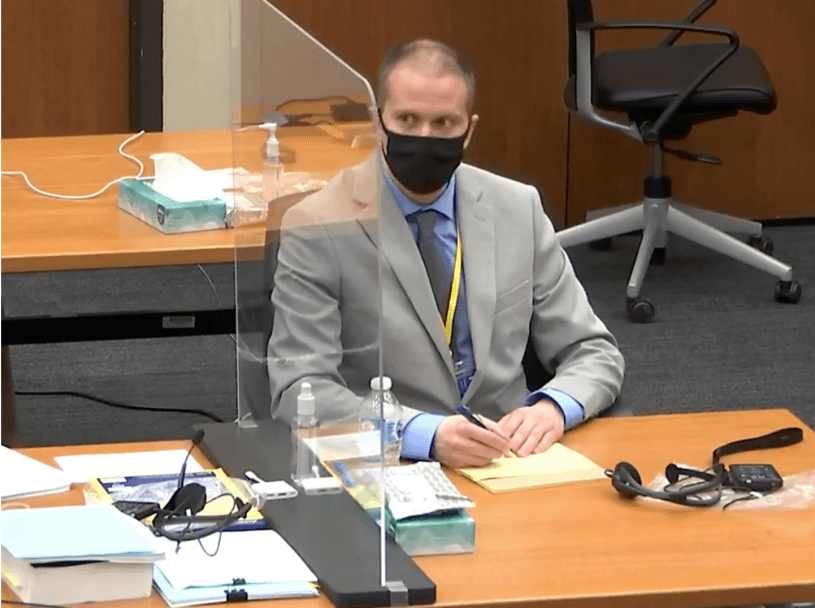
On May 25, George Floyd, a 46 year-old Black man from Minneapolis, Minnesota, was murdered in police custody. He was pulled over for being suspected of using a fake $20 bill. Officer Derek Chauvin kneeled on Floyd’s neck for 9 minutes and 29 seconds, amidst cries from Floyd saying “I can’t breathe.” Two other officers helped restrain Floyd, and one other prevented bystanders from interfering.
Events:
Around 8:00 pm Central Time (CT) that evening, Floyd went to a local grocery store, Cup Foods, and purchased a pack of cigarettes. An employee thought Floyd had paid with a fake bill, and when Floyd refused to return the pack, the employee called the police on him. By 8:10, the police officers had arrived, and after some initial hesitation, Floyd complied with their requests. While arresting him, Floyd collapsed, as he said he was recovering from COVID, was claustrophobic, and had anxiety. After pleading that the officers do not put him in the police car, he offered to lie on the ground instead. After falling to the ground, Officer Derek Chauvin began to kneel on his neck. As bystanders started to record the incident, Floyd begged Chauvin to let him go, saying “I can’t breathe” over 16 times. Those recording implored the officers to let him go, as he was no longer any threat and was complying with them. The officers called in for a non-emergency ambulance. While Chauvin’s knee was on Floyd’s neck, Floyd became unconscious, although Chauvin remained in his place without checking for a pulse and the other officers refused to listen to onlookers pleading they stop. After the ambulance arrived, had loaded Floyd, and was en route to the Hennepin County Medical Center, Floyd was suffering from a cardiac arrest. The ambulance pulled over, and with the help of firefighter medics, Floyd was found to be unresponsive and pulseless. He was pronounced dead at 9:25 pm at the County Medical Center.
Impacts:
Floyd’s murder sparked national and international outrage, causing massive protests, and reigniting the Black Lives Matter movement. Analysts on the subject say that while Floyd is not the first African-American to be killed in the hands of police officers, the video and images of him being slowly suffocated illustrated to the world the amount of wrongdoing that occurred in this case.
In Minnesota, the city of Minneapolis agreed to pay $27 million to George Floyd’s family to settle their wrongful death lawsuit. The trial of Derek Chauvin also recently concluded, with the jury finding him guilty on the counts of second-degree unintentional murder, third-degree murder, and second-degree manslaughter. The numerous instances of police misconduct especially with people of color has led to a widespread call for police reform and community-based policing. President Joe Biden has been promoting the George Floyd Justice in Policing Act, which, among other things, would end certain inhumane policing practices, improve police training, invest in community programs, and promote more equitable policies.
Worldwide, protests over George Floyd and the BLM movement have occurred in all inhabited continents: Europe, the Americas, Asia, Africa, and Australia. In many countries, the global attention towards police brutality has brought up their own conversations about how police treat different groups. For example, protesters in France have drawn parallels between police brutality in the U.S. to the killing of Adama Traoré, a 24-year old Black man who died in 2016 while in police custody. This new examination of race relations across the world has even sparked petitioners to demand that Indian skin-lightening company Fair & Lovely change its name, which is now Glow & Lovely.
As other cases of police brutality like Breonna Taylor, Daunte Wright, and many more continue to occur, the pressure is now on local, state, federal, and global leaders to make decisions and begin to address the clear racial and socioeconomic disparities of the victims of poor law enforcement practices, as studies have determined that Black men are 2-2.5 times as likely to be killed by a police officer than a white man, with people of color having higher rates of suffering from police brutality than white people.
 The Global Monitor