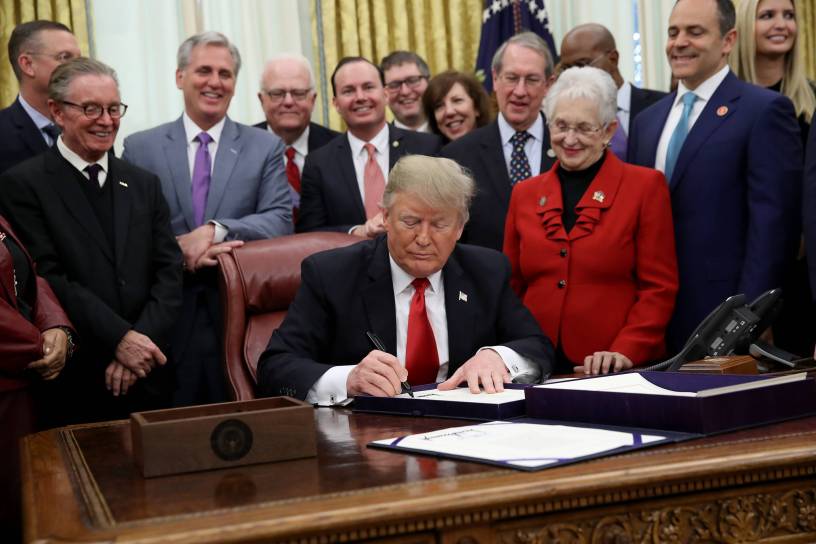
America’s criminal justice system has been a hot topic over the last few months both within our country and internationally. Many Americans are looking for a change within the system, and rightfully so. It is no secret that our criminal justice system has failed in terms of rehabilitation, seeing as we have 5% of the world’s population, yet 25% of the world’s prisoners.
Although there is no current bill being passed to change the system for the better, we are able to look back into 2018 to The First Step Act which continues to be implemented to this day. Now we must ask ourselves: how effective has this bill been? What other changes need to be made in our system to prioritize the reintegration of prisoners into society instead of disproportionally punishing them for their crimes?
In order to do this, let’s delve into the specifics of the bill and its effectiveness thus far.
The Makeup of the Bill
- Implementing the Risk and Needs Assessment System into the BOP that will continually reassess prisoners for a risk of recidivism, look into alternate programming instead of incarceration (this will be based on the severity of the crime) which will allow prisoners to earn a number of credits that could result in an early release into custody.
- Make changes in the sentencing of certain crimes and changes some mandatory minimums by taking into consideration previous charges, etc.
- Reintroduced The Second Chance Act which allows for more grant programs to be available for prisoners, along with changes to the criminal justice system itself such as not allowing restraints on pregnant prisoners, a more secure way of storing firearms, and a mandatory requirement of keeping inmates within 500 miles of their homes among other things.
Evaluating its Success
According to The Sentencing Project, more than 2,000 prisoners were able to take off an average of 6 years of their time, with the African American population making up around 91% of these changes. Additionally, nearly 110 prisoners were able to have “compassionate release” to take off time of their sentences. Lastly, nearly 3,000 prisoners were able to have an early release date due to the credits they earned in their accommodating programs.
In the Future…
Through this source, we are able to clearly see an impact made by this bill. A few thousand American inmates were able to have tangible results from this bill that previously were going to serve their full sentences in prison. This bill is definitely a start, but it is certainly not enough. The name of the bill, “The First Step Act”, is a great indicator of how it should act; it cannot stand alone. This must be the start of more government-sanctioned changes to the American criminal justice system.
When taking into account a possibility of early release, there must be a greater consideration not only in an inmate’s behavior within activities and programs while incarcerated, but also their outside circumstances while the crime was being committed. Not every story is the same, and they cannot be treated as such. How can the criminal justice system help change the negative environment that possibly led to a crime being committed? How can we battle addiction as a disease and not a crime? How can we help inmates when they leave prison to restore their relationships and connections as smoothly as possible?
These are simply a few questions that the United States must come to terms with in order to give every American the possibility of rehabilitation and reintegration, not simply punishment, through the criminal justice system. The First Step Act, although continuing to positively affect prisoners today, is only the very beginning of this effort.
 The Global Monitor