On Friday, Singaporeans lined up at polling stations across the country and voted for their district representatives. While the winner was never in question, the results indicate that political change may be on the horizon.
The People’s Action Party, or PAP, is the center-right group that has had control over Singapore’s legislative branch well before they gained independence from Malaysia in 1965. Led by Prime Minister Lee Kuan Yew, the PAP transformed Singapore from a developing nation to a first-world one, currently boasting a higher average personal wealth than the United States. This shockingly quick transformation has led to long lists of accomplishments by MPs in turn translating to easy election victories. The most recent general election, however, shows signs that this 61 year-long stretch of unrivaled dominance may be crumbling.
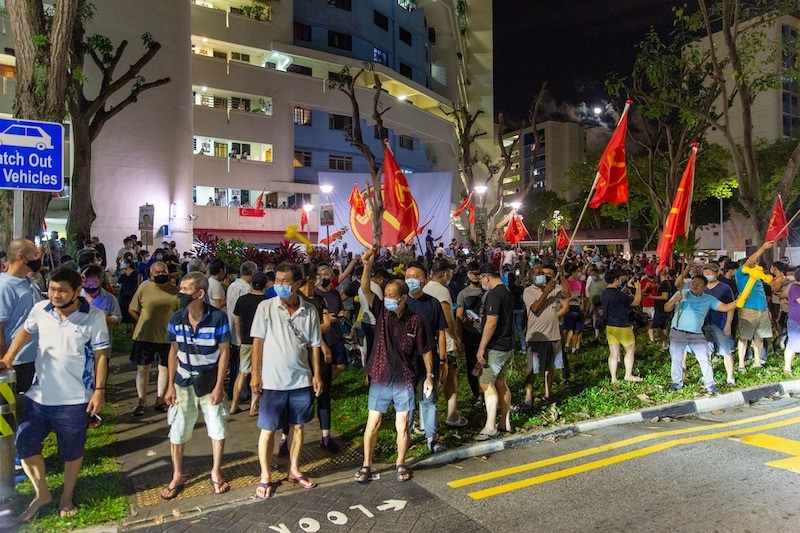
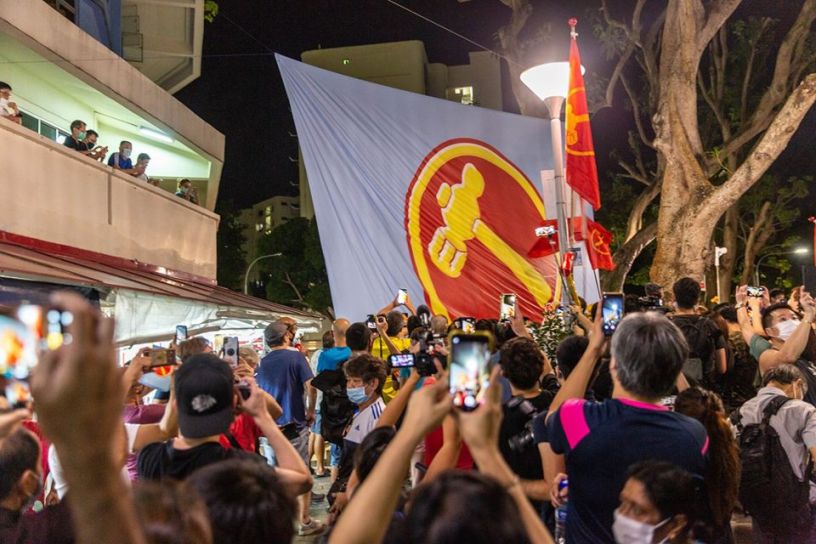
In viewing the post-election celebrations, you would be forgiven in believing that the Worker’s Party, the main opposition to the PAP, had taken the majority in parliament. Despite only expanding their influence by 4 seats, the 2020 GE has resulted in the second-worst showing for the PAP in their history, now holding only 83 of the 93 available seats. Perhaps more significantly, only around 60% of the popular vote was in favor of the PAP, with many districts won by less than 10%. Compared with the last general election, when the PAP garnered around 70% of the vote, 2020’s general election show that Singapore may be on the precipice of a regime change.
While Singapore’s $64,000 GDP per capita and soaring glass skyscrapers may seem almost utopian, look closer and you can find economic and political problems, a significant factor in the waning support of the PAP. Things like the exploding cost of living, COVID-19, and stifling political laws have driven young and underprivileged to vote for WP candidates.
With an average single person living expense of almost $50,000 a year, Singapore is the second most expensive country in Asian and the ninth most expensive in the world. Paired with the high number of low wage migrant workers, standards of living for the impoverished have fallen over the last decade. Because the city lacks a minimum wage, these workers are often paid less than $10,000 a year, inadequate for a city as costly as Singapore. Additionally, because Singapore lacks any real suburban and rural areas, workers are unable to move to less costly regions without sacrificing their quality of life. With living costs only increasing, many have turned to the Worker’s Party for help.
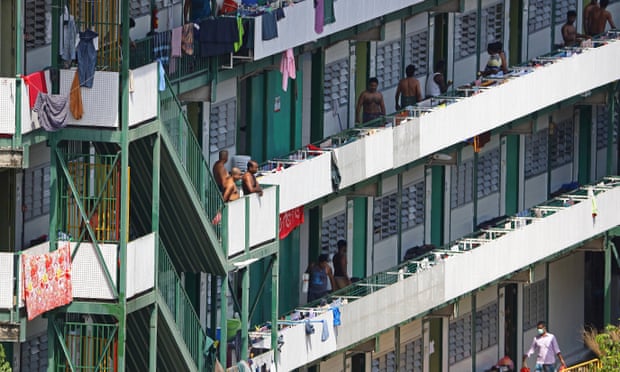
For now, the only option the 1.4 million foreign workers have is to live in cramped and overpopulated housing complexes. Coupled with the Corona Virus outbreak this year, the low income demographic has suffered disproportionally more than the rest of Singapore. Such abysmal living conditions have led to government dissent and support of non-PAP alternatives.
A more dangerous source of WP support, however, comes from the slight but noticeable erosion of civil liberties. One such example is the Protection from Online Falsehoods and Manipulations Act (POFMA). Colloquially known as the “fake news act”, the POFMA gives the government the power to remove information deemed to be harmful to Singapore’s security or “public tranquility” on social media and messaging sites. With wording eerily similar to potent censorship laws in China and Russia, the POFMA is as ambiguous as it is dangerous. Unfortunately, within only a year of the act taking effect, there are already dozens of examples of muted whistleblowers and dissenters. Because the PAP controls the agencies tasked with the elimination of disruptive speech, opposition parties have also fallen victim to seemingly politically motivated censorship.
Social media has always been a primary medium through which parties share their ideology. With this sort of speech under control of the PAP, there is now a limit to how much they can criticize the actions of the current government, which is a principle method used to unseat incumbents. In the eyes of many Singaporeans, this limitation of political speech, especially in the age of COVID where rallies are banned, shows an apparent disregard of democratic principles. Opposition parties, especially the WP, have used actions like these to push a narrative that the government is solidifying their rule and shutting down opposition, which has attracted notable support. While the intent behind the bill was likely not total political censorship, restricting free speech can be a slippery slope, making the WP’s concerns grounded.
These factors along with general discomfort around the de facto single-party rule, are driving many Singaporeans to step away from the PAP in support of other parties. While a net gain of 4 parliamentary seats cannot be extrapolated to be an impending political revolution, it is certain that the PAP will no longer enjoy the total electoral dominance it once had.

