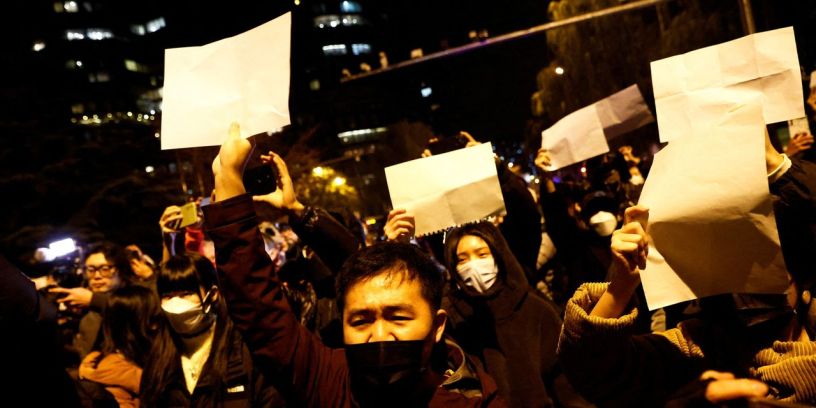
In a rare demonstration of public defiance, protests have erupted across China in opposition to the nation’s strict Covid-19 policies. This backlash was triggered after a fire in Urumqi, the capital of the Xinjiang Autonomous Region in northwest China, killed at least ten people on November 24, and firefighters were delayed from reaching the victims due to lockdown restrictions. However, to many protesters, the demonstrations are about much more than Covid – they bring together many liberal-minded young people whose attempts to speak out might otherwise be thwarted by strict online censorship.
China’s “Zero-Covid” policy has led to extreme controls over the past three years, including mass testing, forced quarantine, and digital tracking. Both economic and human costs have spiked under these measures, increasing dissent across the country. For example, a two-month lockdown in Shanghai sparked outrage when it left hundreds without adequate access to food, medical care, and other necessities.
These demonstrations, reported in at least 16 separate locations, are especially significant due to the Chinese Communist Party’s crackdown on defiance and the high levels of surveillance of the Chinese people. As such, open protests rarely occur, let alone on this scale. From Guangzhou to Beijing, tens of thousands of people have taken to the streets, some even calling for the removal of Chinese leader Xi Jinping and the CCP as a whole. Furthermore, alongside vigils and chants for freedom, hundreds of young protestors have held up blank pieces of paper, a symbolic gesture challenging the mass censorship of the Chinese government.
Though these protests have already attracted international attention, Chinese authorities are still attempting to wipe evidence of these demonstrations from the news. While statewide media has not covered the protests, they have doubled down on coverage and support of China’s zero-Covid policies, describing it as “the most scientifically effective” approach. Some demonstrations have been peacefully dissolved, but others have faced harsher backlash. Videos and evidence have circulated of physical altercations between protesters and the police and people have been arrested in droves. Road blockages and police surveillance have also increased in major cities like Shanghai and Beijing. However, overall, attempts at suppressing these protests appear to have been largely ineffective, instead only spurring people to call further for freedom, democracy, and free speech.
It is uncertain how this nationwide movement will resolve. Demonstrators have expressed deep anger and frustration at their circumstances, and perhaps most importantly, a determination to fight until a change has been made.
 The Global Monitor