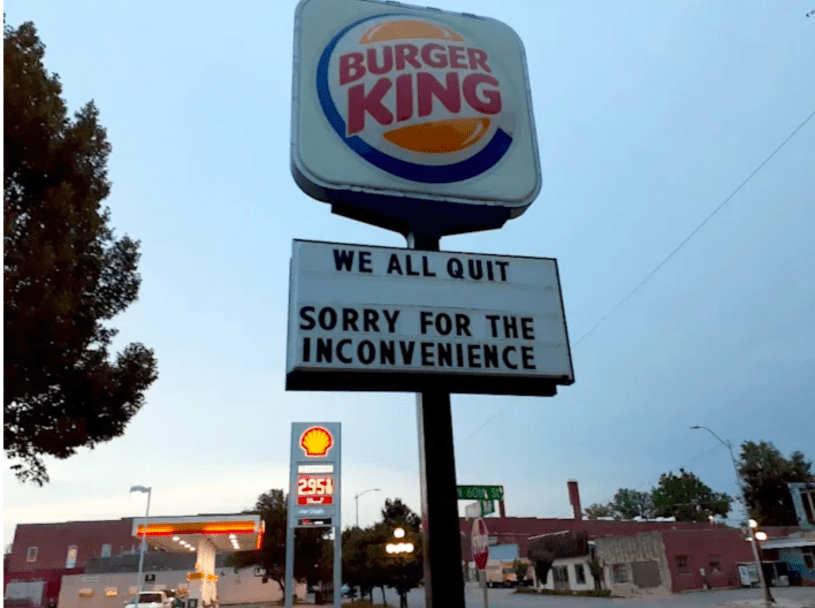
A record number of people are leaving their jobs in the so-called “Great Resignation,” but why? During the majority of the pandemic, the United States was struggling with the opposite: vast unemployment. But after nearly 2 years of the pandemic, businesses are facing a shortage of workers. In November 2021 alone, 3% of the workforce, or 4.5 million people, quit their jobs, with 1 million of those from the leisure and hospitality industry. These numbers make last November the 8th month in a row of record numbers of people leaving their employers.
The majority of people saying “I quit” come from low-wage sectors and are searching for better-paying jobs and opportunities. A study found that COVID-19 was actually a large part of their reason for quitting: the pandemic led them to believe that life is too short to remain employed at jobs in which they have little interest. Additionally, the virus has caused people to be worried for their personal safety, especially with the large surge caused by the Omicron variant. This concern may explain why almost 25% of people who left their jobs were part of the hospitality industry, as they are constantly in contact with people from around the world who could infect them with COVID.
Another major reason why people are leaving their jobs is because of the lack of access to childcare. “Childcare deserts,” areas with few childcare centers, are being exacerbated by the labor shortage as 100,000 people left the childcare sector alone. Many of these workers left their jobs for reasons similar to others’: low-pay and undesirable working conditions.
While the current overall labor force participation rate is about 2% less than pre-pandemic levels, those over the age of 55 in the workforce are recovering much slower than those ages 25-54. Economists believe that early retirement is causing these older workers to not return to their jobs. While some people in this group have been benefiting from the strong stock market and rising home values, others have been simply forced out of their jobs. As they are generally at a higher risk for complications if they were to contract COVID-19, many have been hesitant to fully return to the workforce. Others are losing job opportunities to younger applicants with more education.
Businesses are being affected in different ways by the labor shortage. Many big companies have been saying that they “do not have enough workers,” which could lead to rising costs for goods and services. Rising costs can have both positive and negative effects: small businesses will be hit harder, as they have less income with which to pay higher wages, but higher wages may also attract more qualified employees. As the country navigates returning to “normal” amidst the raging Omicron variant and multiple economic shocks like supply chain disruptions and the labor shortage, it is unclear how the rest of the new year will proceed.
 The Global Monitor