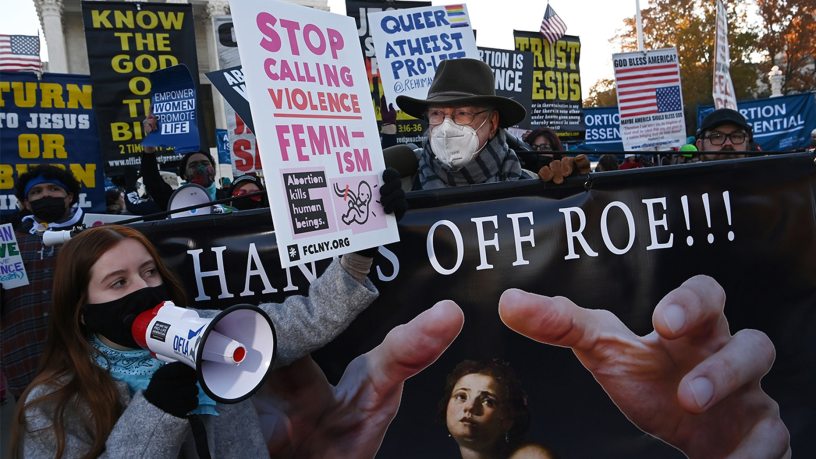
The controversy surrounding abortion has been a longstanding problem ever since the 1900s. Surprisingly, during the early 19th century, abortion was not an issue that people fought about. It only started to become a controversial topic due to concerns about poisoning from the drugs that were used for abortion. The issue later developed into the conflict between humanitarian views – those who wish to protect the lives of unborn babies – and basic human rights – those who believe in a woman’s right to make decisions for her own body. Several legal measures have been implemented in the attempt to resolve this controversy, yet it still exists.
Just recently, Mississippi’s ban on abortion after 15 weeks was challenged yet once again even after those that were imposed upon it in 2018. This law lead to the beginning of the most recent Supreme Court abortion case. One of the root causes of this dispute is the 1973 Supreme Court case Roe v. Wade that legalized abortion up to 24 weeks of pregnancy. The case started when a woman called Jane Roe filed a lawsuit against Henry Wade, the district attorney of Dallas County, Texas, where she resided. She challenged several Texas laws about abortion as they violated the First, Fourth, Fifth, Ninth, and Fourteenth Amendments. The case ended with a 7-2 majority of the Court on Roe’s side. About two decades later, the Planned Parenthood v. Casey case took place, which upheld Roe v. Wade. However, despite these two prior cases, in 2018, the Supreme Court later decided to uphold Mississippi’s abortion law, which outlaws abortion 15 weeks into pregnancy, a time period much shorter than the preceding law. The Mississippi law had been previously blocked by lower courts as it violated the viability line of 24 weeks after pregnancy. Despite this, even after 50 years of court controversies, the fight for and against the Mississippi abortion law is still ongoing.
Additionally, many conservatives have questioned the reliability of Roe and argued that it should be overturned. Some even pointed out that the best solution would be returning to the position of neutrality, which would be having no laws for or against abortion in the first place. If the Supreme Court were to overturn Roe, the topic of abortion would be left to each individual state to handle. Experts of local law have stated that if Roe is overturned, 24 states are certain or very likely to ban abortion. Additionally, if the Supreme Court allows Mississippi’s ban on abortion after 15 weeks, it is very likely that other states will also attempt to ban abortion after shorter periods of time. Not to mention, Texas has already implemented its own ban on abortion after merely six weeks, although many are waiting for court rulings to permit lawsuits against the law. Several people have also claimed that the court’s decisions on the Mississippi law will be released in late June 2022. Many speculate that the Supreme Court is very likely to uphold the law, which could ultimately impact the lives of all women.
 The Global Monitor