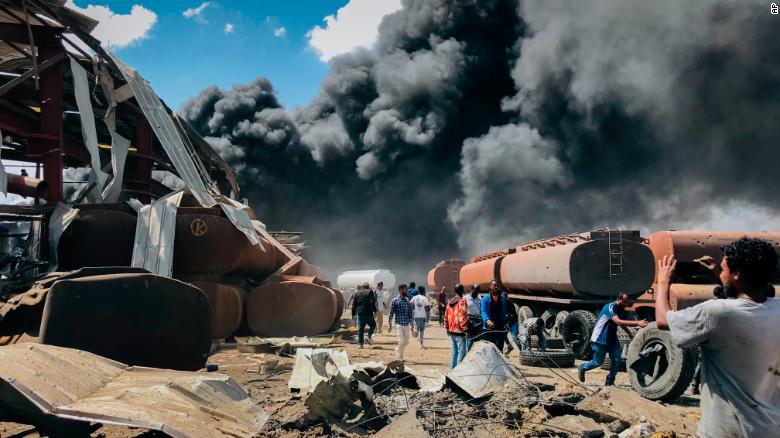
The Tigray region in Ethiopia has been under open fire as the conflict within the nation thickens between a rebel group and the Ethiopian government. An airstrike launched in late October was confirmed to have hit the regional capital of Mekelle, injuring at least eleven. This strike marks the fourth day Mekelle has been targeted by the government within a week.
The conflict began back in November 2020, but has escalated in recent weeks. A rebel group called the Tigray People’s Liberation Front (TPLF), which has control of the northern region, has seized territory in Amhara, a neighboring region of Tigray. Panic has begun to set in and people are attempting to flee to the capital of Ethiopia, Addis Ababa. However, the bus fee to the capital grew six fold, making it difficult for many to escape the conflict. Over 500,000 residents in the Amhara region have been internally displaced, as the fighting continues to escalate.
The Ethiopian government considers the TPLF a terrorist organization and a major threat. Beginning in the 1970s as a small militia of Tigrarians, the TPLF controlled Ethiopia for almost three decades. Now, they are involved in the ongoing conflict throughout the nation as they try to gain back territory.
The United Nations has attempted to provide assistance to those struggling as conflict in the area intensifies. They have faced yet another setback as one of their flights was forced to abort due to airstrikes. The United Nations Humanitarian Air Service flight was sent back to Addis Ababa, the first time one of their flights to the Tigray region was forced to abort its mission.
A rebel military training center was said to be struck down by the Ethiopian government during the air strikes. As a result of the fighting throughout the country, there are at least seven million people in need of humanitarian assistance, with an estimated 400,000 suffering from famine-like conditions. With counter attacks happening from both sides, the fighting has spread to neighboring regions within the country, as the year-old war continues to cause more damage and suffering to the regions’ inhabitants.
The perpetual conflict within the country has begun to spoil the Prime Minister, Abiy Ahmed’s reputation. Relations between the United States and Mr. Abiy, as well as the United Nations and Mr. Abiy, have worsened since the conflict began. Both the United States and the United Nations have tried sending assistance to victims of the fighting, urging Mr. Abiy to settle the issues permeating his country.
 The Global Monitor