During the 1960s to mid-1970s, Lebanon enjoyed economic prosperity and stability due to its strong banking institutions, trade with oil-rich Arab nations, and international shipping.
Unfortunately, from 1975-1990, Lebanon entered a period of political unrest and civil war which destroyed the once stable Lebanese economy.
After a very fragile peace agreement brokered by Syria, Lebanon began rebuilding its economy and government. However, the reconstruction of Lebanon’s economy and hopes of political stability continues to be problematic.
Throughout Lebanon’s main cities, such as Beirut and Tripoli, neighborhoods and districts are based on religious affiliations. For example, Christian areas are managed by Christian politicians and often protected by Christian militias who patrol the streets. The same happens in Muslim areas as Muslim militias control the streets. The separation of living and business zones based on religion places constant pressure on the central government. Local politicians will often only look after those with the same religious affiliations, often keeping or diverting important funds. This vicious cycle often leads to a lack of progress and corruption.
Political rivalries, antagonism, and economic growth go together in Lebanon. As the religious minority in Lebanon, Christian political parties believe they will not receive fair representation in an inclusive government. On the other hand, Muslims believe that in the eyes of the international community, they will always be seen as the aggressors and will be forced to compromise and give up too much political power.
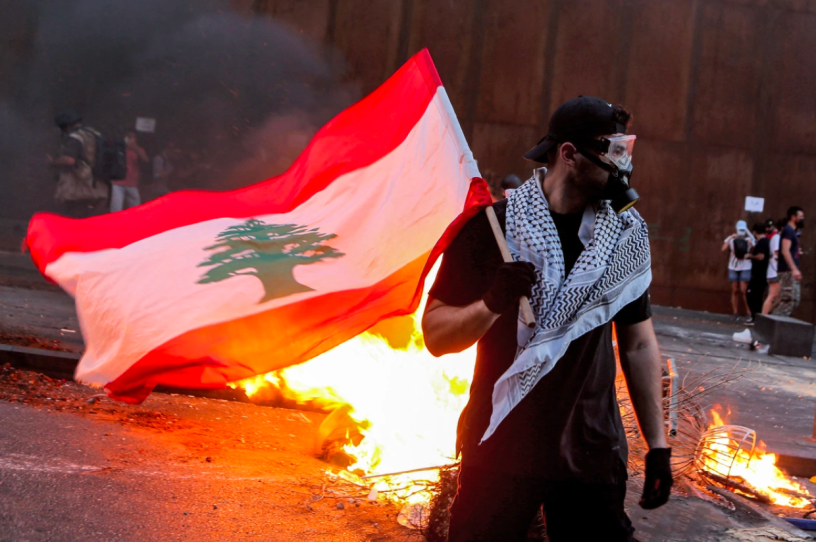
Lately, the COVID-19 pandemic has slowed further attempts to lower the country’s debt or restructure the economy. In addition, the massive and deadly explosion at Beirut’s port in August of 2020 killed over 200 and injured thousands, stalling the economy. The explosion caused accusations and a deadly surge of sectarian (Muslim Sunni versus Muslim Shia) violence, along with Christian militia groups fighting both Muslim sects that are still occurring today. The damage and chaos resulting from the explosion resulted in international condemnation of the Lebanese government and warring factions. However, the mysterious port explosion remains unsolved today, serving as an example of the inability of the different groups to put aside their differences to properly solve the cause of the explosion. With COVID-19 still wreaking havoc, a weakened economy showing little signs of improving, and the international community watching, Lebanon is feeling the urgency to strive for peace or risk being plunged back into a deadly civil war similar to the one in the 1980-1990s.
 The Global Monitor