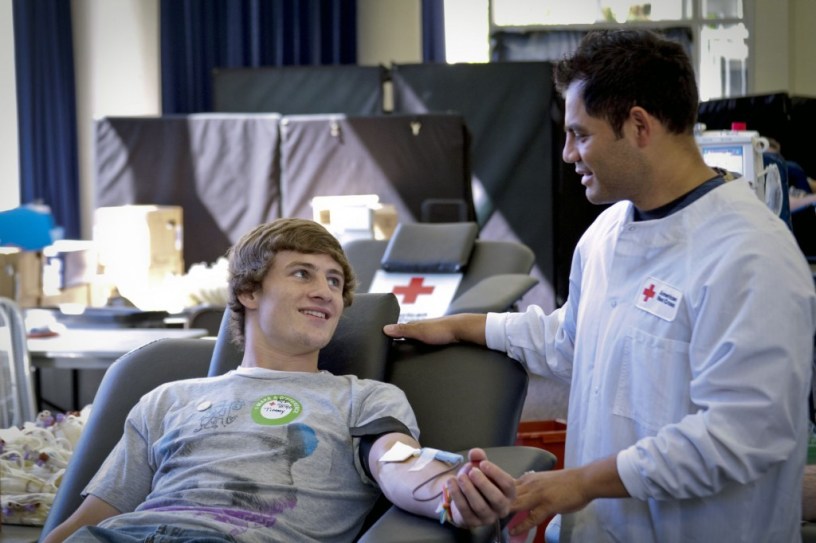
The American Red Cross, internationally recognized and known humanitarian organization, continues to struggle through its countrywide blood and platelet shortage crisis. As the COVID-19 pandemic rages on throughout the country, hospitals are in need of more and more blood to support their patients.
While this high demand for blood is not new, the months of September and October have shown the lowest blood donor turnout numbers in over a decade, decreasing by 10% since August of this year. This new shortage is due to he COVID-19 Pandemic, which has caused any blood drives to be canceled and donation centers to be closed since March of 2020.
Not only have cancellations and closures caused an issue in the nation’s blood supply, but the patients who need blood for their treatments themselves are causing the major increase in demand for blood. At the height of the pandemic, many patients were scared to seek treatment for their illness or disease due to their fear of possibly contracting COVID-19. Now that the pandemic has begun to settle down and fear has subsided, many ill individuals are just now seeking treatment with advanced disease progression, which can very well mean more blood is needed than if the patient came in at the start of disease progression.
While the pandemic halted many drives, donations and caused a massive blood shortage, medical emergencies requiring blood for treatment do not stop. Chris Hrouda, the President of Red Cross Biomedical services say, “We recognize that this is a trying time for our country as we balance the new demands of returning to former routines with the ongoing pandemic, but lifesaving blood donations remains essential for hospitals patients in need of emergency and medical care that can’t wait.” He continues, saying “The Red Cross is working around the clock to meet the blood needs of hospitals and patients – but we can’t do it alone.”
To combat the shortage, the Red Cross has even provided incentives to lure eligible individuals to donate. Pulling away from the traditional cookie and stress ball, those who donated in September received a T-Shirt and a SportsCut coupon; those who donated in October received a $5 gift card redeemable at the merchant of their choice and a Zaxby’s Signature Sandwich reward. For those who donate O-Negative blood, the rewards were even greater depending on how many times you donated. Through November 23, blood donors are eligible to receive a $10 Amazon gift card for their generous donation.
Blood donation centers and drives are pridefully advertising that their blood drives follow the “highest standards of safety and infection control, and additional precautions – including face masks for donors and staff, regardless of vaccination status – have been implemented to help protect the health of all those in attendance” in the effort to settle the nerves of those who may be anxious of health concerns as well as to keep donors safe so they can continue to host drives.
“One donation can potentially save up to three lives,” according to the Red Cross.
A donor in Tennessee, Shaun Brennan, recently hit his 500th blood or platelet donation. He has been trying his best throughout the pandemic to donate as much as he can even though he’s been busy. He believes no one is too busy to donate blood and uses himself as a prime example of this idea: “I’m a busy guy, but I make time because it’s about the person I’m helping. When you add it up, there is no comparison. It’s not about finding time to donate, it’s about making time to donate. It’s all about saving lives.”
The Red Cross continues to urge eligible individuals to donate blood whenever possible; it takes a village to eradicate the blood shortage, but the Red Cross believes it can be done.
—
To check if you’re eligible to donate blood, make an appointment, inquire about hosting a blood drive, or learn more about blood donation – visit redcrossblood.org.
 The Global Monitor