In recent years, Niger has been dealing with multiple armed campaigns within its country and from bordering countries. These terrorist attacks pose a challenge for a country designated by the United Nations in its development rankings as the world’s poorest nation. The most recent attack killed at least 137 people in Intazayene, Bakorat, and Wistane, all Nigerien villages near the Mali border. This death count was updated by the government on Monday, March 22, 2021; the previous death count had been only 60. The attackers were armed with guns and used motorbikes to raid these villages.
This is not the first time violence against citizens has occurred, but the violence was overwhelmingly more brutal this time. The government has called this attack the bloodiest violence to hit the country in years. Local officials say that the attackers shot “at everything which moved.” On public television, government spokesman Zakaria Abdourahamane gave a statement: “In treating civilian populations systematically as targets now, these armed bandits have gone a step further into horror and brutality.”
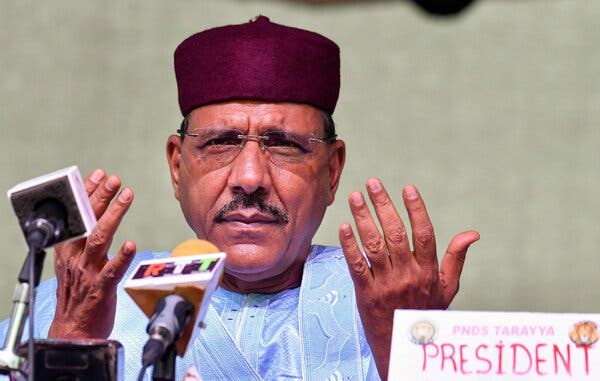
This specific attack also poses a timely challenge for the government. Niger has just elected a new president, Mohamed Bazoum. Bazoum was the preferred successor and was close to President Mahamadou Issoufou. The country will be on watch as to how the new president will deal with the armed campaigns that have injured the country by killing hundreds of people and affecting half a million more. This is a complicated issue to address as there is not a singular group coordinating all of these attacks for Bazoum to target. Though the attacks are not always conducted by the same terrorists, the region of this recent attack is a notable area for conflict with a history of violence. The Tahoua region of these villages is an area frequently affected by fighters from al-Qaeda and ISIL (ISIS).
Unfortunately, these attacks are not uncommon. Only a week ago, there was another attack. March 15 was a day of not one, but two attacks–one of which was claimed by ISIL. 66 people in the Tillaberi region were killed when a group of fighters attacked a bus carrying civilian shoppers from a market. These attackers then raided Darey-Daye, a village where they killed more people and torched grain stores. The ISIL attack on the same day killed 33 Malian soldiers in the “tri-border area,” an area given this term because it is where the frontiers of Niger, Burkina Faso, and Mali converge.
The attacks of March 15 led to a pledge to fight insecurity by the newly elected president, Mohamed Bazoum. Subsequently, Bazoum ordered army reinforcements to the Tillaberi region. Being part of the G5 Sahel, Niger was able to deploy 1,200 soldiers from the Chadian army. The G5 Sahel is a France-backed alliance between Burkina Faso, Chad, Mali, Mauritania, and Niger, aimed at increasing cooperation for development and security in the Sahel region. Niger hopes utilizing this west African resource will be an effective strategy since the Chadian army has a reputation of being the toughest in the region.
Earlier attacks in Niger include one on January 2 during the presidential election that killed 100 people; one on January 9 that killed 89 men in the Nigerien army; and one from December, 2019 that killed 71 Nigerien soldiers. Previously, the January 2 attack had been seen as one of the worst massacres in Niger’s history, but the most recent March 21 attack, as exemplified by the death count, has exceeded even that.
 The Global Monitor