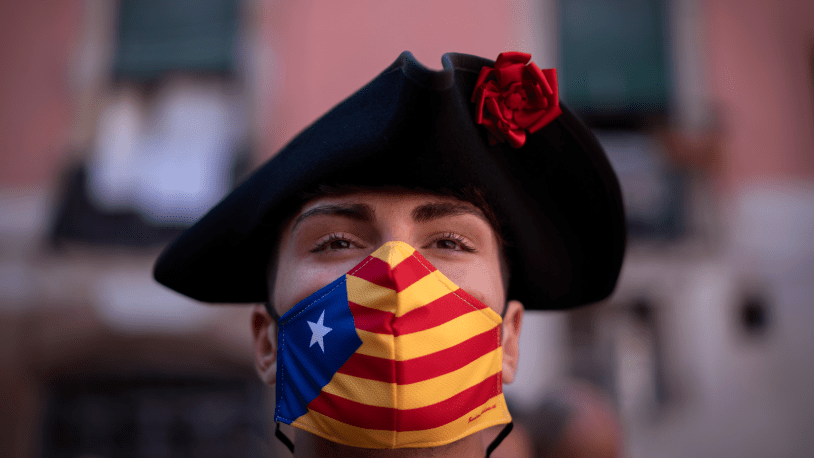
The results of the recent elections in Spain’s Catalonia region has sparked new hope for the separatists who have long awaited Catalonia’s secession from Spain and the creation of their own nation-state.
Before the Spanish Civil War, the region was mostly autonomous, although it was oppressed by General Francisco Franco Bahamonde, who ruled Spain as a dictator for nearly 40 years. It has its own language, Catalan, unique traditions, and a population of 7.5 million people. Its level of autonomy has fluctuated over time: between 2006 and 2010, a statute described the region as a “nation” before it was reversed by Spain’s Constitutional Court.
Today, Catalonia accounts for 16% of Spain’s population and 19% of its GDP, which is a large reason why Spain refuses to let the region secede. Currently, Catalonia consists of large cities like Barcelona, the second most populous city in Spain after Madrid, the fifth-most populous urban area in the EU, and a popular tourist destination. It also contains many smaller cities and towns located in more rural areas.
The Catalonian Elections in 2017 were also a major and noteworthy turning point in Catalonia’s push for independence. After their regional elections in which the Separatists won a majority, Spain’s then-Prime Minister Mariano Rajoy used his emergency powers to impose direct rule on the region, something that has never been done in Spain’s democratic history. He then proceeded to call for new elections; however, this plan backfired: the secessionists narrowly won the new Parliamentary elections. The Spanish government even attempted to crack down on the movement by punishing some separatist leaders by prosecuting them for sedition and rebellion. This regional chaos caused both national and European-wide concern as a rise in nationalism and populism throughout the continent has caused other countries to worry about possible uprisings in their nations as well.
Even with reduced turnout due to the pandemic, Catalonia’s regional elections this past month proved to be yet another defeat for the Spanish government, as pro-independence parties once again won a majority of the votes. This outcome has emboldened the separatist movement as they continue in their battle for their own nation-state. The voter tendencies illustrate that parties like Esquerra Republicana, a moderate left-wing party that advocates for independence but works better with Madrid, are favored and earn more votes. This trend towards more moderate ideals has helped calm down the Spanish government and has quelled the fear of more radical parties dominating the elections, which led to Spain’s questionable actions in 2017. Unfortunately for the separatists, even after the recent elections, Madridstill has made clear that any kind of indepence remains off the table. Furthermore, even amidst the moderate separatist parties gaining more votes, extreme parties like Together for Catalonia (secessionist) and Vox, a national party (anti-secession), will also have some seats in the newly elected regional Parliament, which indicates increasing polarization.
The main takeaway from the recent and past Catalonian elections is that the separatist movement is here to stay. Initially, many thought of it as a response to the 2008 financial crisis, but as the economy recovered, the movement only strengthened. However, there is still a long way to go before any independent Catalonia is formed. There is still widespread hesitancy both in Spain and the European Union, even with democratic wins like these helping the secessionists’ case. Some ideas for independence, like asymmetrical federalism, have been floated around, but the main goal of the separatists is for their own, fully autonomous nation. The call for dialogue and meaningful negotiations has been strengthened with the 2021 election, and only time will tell how far this movement will go.
 The Global Monitor