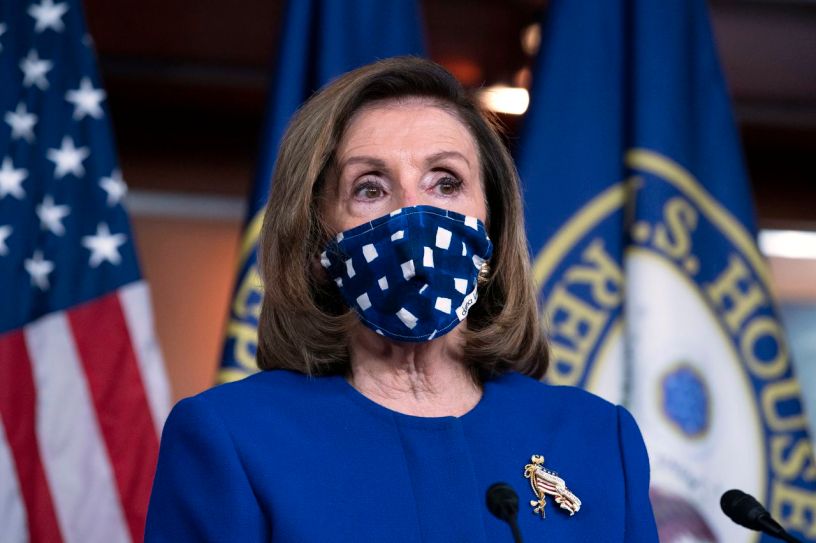
WASHINGTON DC – On Thursday, House Speaker Nancy Pelosi told reporters that she expects the House to pass the 2021 stimulus package by the end of the month. While none deny the necessity of a new unemployment package, Republicans and Democrats have made it clear that they disagree on what the bill should look like. As a result, partisan frictions threaten to slow down the passage of the bill.
Among economists, there is growing agreement that the economy is set for a sizable recovery in 2021. Many fear that the large 1.9 trillion dollar package proposed by Democrats will overshoot the need, resulting in wasted spending. Although many Americans lost jobs during the pandemic, most have been restored, and reductions in consumer opportunities have led to Americans saving more money. Additionally, Government transfer payments were much larger than the losses that households took. These factors culminated in a 10.5% increase in real disposable income per capita in the second quarter of 2020. With the economy expanding at an increasing rate, such gains will likely continue.
Opponents of the bill suggest that running the economy “hot” could result in rapid inflation and unprecedented increases in Federal Reserve asset holdings. While Republicans voiced such opinions when they met with president Biden in early February, the dollar size of the current package is evidence Democrats have largely ignored their concerns. Rather, Democrats believe that the negative effects of undershooting need eclipse those of overshooting it. Thus, proponents believe that inadequate support would only result in unnecessary decreases in quality of life and slow economic expansion.
Although these disagreements will practically not matter in the House because of the significant Democratic majority, tensions are already building in the Senate where the margin is a single vote. Traditionally, when bills pass through the Senate, the minority party can filibuster, which can only end with a cloture vote of 60 senators. In this way, the minority party has some degree of legislative influence when electoral margins are slim. Because the 117th congress is split 50/50, 10 Republican votes would be needed to stop a theoretical filibuster. With the passage of the bill being time-sensitive, Senate Democrats have announced that they plan to pass it under a set of complex rules called budget reconciliation which will allow them to approve the bill without needing a cloture vote. In order to ensure that all of the conditions are met, Democrats will need to meet with the Senate Parliamentarian who decides what can be passed under reconciliation. Receiving a favorable result from the Parliamentarianwill be crucial to the passage of the bill.
Assuming that the bill is approved as is, Democrats need only a simple majority for the Senate to pass it. Under budget reconciliation, debate is strictly limited so a filibuster is not possible. With Vice President Kamala Harris breaking the 50/50 tie, Democrats will have everything they need to pass the bill, without the need for compromise. That said, just 1 vote could stop the passage of the bill.
Initially, some Democratic senators voiced concerns about who would get the benefits of the package, worrying that people who are financially well off may reap the same benefits as those who are impoverished. To address this issue in the COVID relief package, the House has structured payouts as to not affect individuals earning more than $100,000. On Thursday, Senator Chuck Schumer (D – NY) said that such changes are “right in the ballpark” of what his caucus supports, indicating that Democrats will likely get the 51 votes they need to pass the bill, 1.9 trillion-dollar price tag, and all. The political and economic effects of such a large expenditure are yet to be seen.
 The Global Monitor