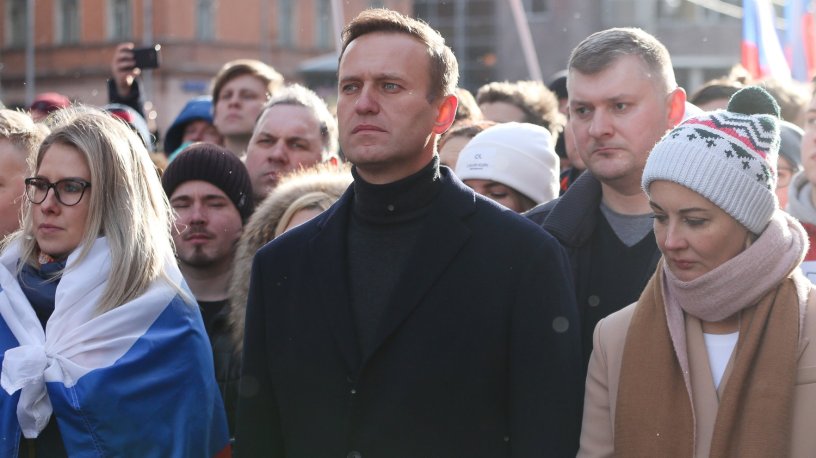
MOSCOW – Following a fiery trial and weeks of some of the largest protests Putin has ever faced, Russia is still reeling from the effects of the return, trial, and jailing of anti-corruption activist Alexei Navalny. Although Russian authorities have cracked down on the larger protests and Navalny is behind bars, Putin and his allies continue to struggle with the ramifications of this groundswell of anti-Putin sentiment. Though Putin has faced his share of protests in his long tenure as the head of Russia, the Navalny protests represent a unique set of challanges. They represent a coordinated coalition of youth activists, anti-corruption groups, and anti-Putin groups. The scale, geographic diversity, and duration of these demonstrations are unmatched in recent Russian history, and over 10,000 people were arrested during these events.
Smaller-scale protests have continued with “flashlight protests” and candle-lit vigils taking place across Russia on February 14th. Despite these continued acts of defiance, the larger-scale demonstrations which occurred in late January have mostly been halted. Russian state TV has used the lack of demonstrations as evidence of Navalny’s movement’s failure, but Navalny’s allies insist that the mass protests are only on pause until Spring.
Despite their smaller scale, Russian authorities have pledged to crack down and stop these pro-Navalny demonstrations. This zero-tolerance approach underscores the Kremlin’s fear of Navalny’s influence even behind bars. As anti-corruption activist and Navalny-supporter Maria Pevchikh said in a recent video, “Navalny went from a person whose name is not allowed to be mentioned to the main subject of discussion.” Navalny’s meteoric rise in fame and continued presence in the national discussion highlights the scope of the challenge Putin faces in preserving his strongman image over a united Russia.
The Kremlin’s fear over Navalny has further extended into its foreign policy. The recent jailing of Navalny loomed over the high profile meeting between the EU’s foreign policy chief Josep Borrell and Russian Foreign Minister Sergei Lavrov. The meeting was widely considered a failure, as several in the EU felt Borrell had failed to address the Navalny issue adequately, and it led to calls for Borrell’s resignation. Following the meeting, Lavrov described the EU as an “unreliable partner,” and last Friday, he threatened to cut ties with the EU if the EU imposed sanctions over Navalny. In response, Borrell described the summit and the Navalny issue as “a low point in our relationship.”
In a February 14th interview, Putin further criticized the West as trying to “contain” Russia through Navalny. The actions of both Putin and Lavrov are part of the usual playbook of the Putin regime of shoring up support by depicting the West as a hostile, invading force. Whether or not this tactic works this time is yet to be seen, but the Navalny incident has already shaken up the geopolitical stage. As the situation develops, European countries face renewed pressure to abandon projects with Russia, such as the German-Russian Nord Stream 2 pipeline.
 The Global Monitor