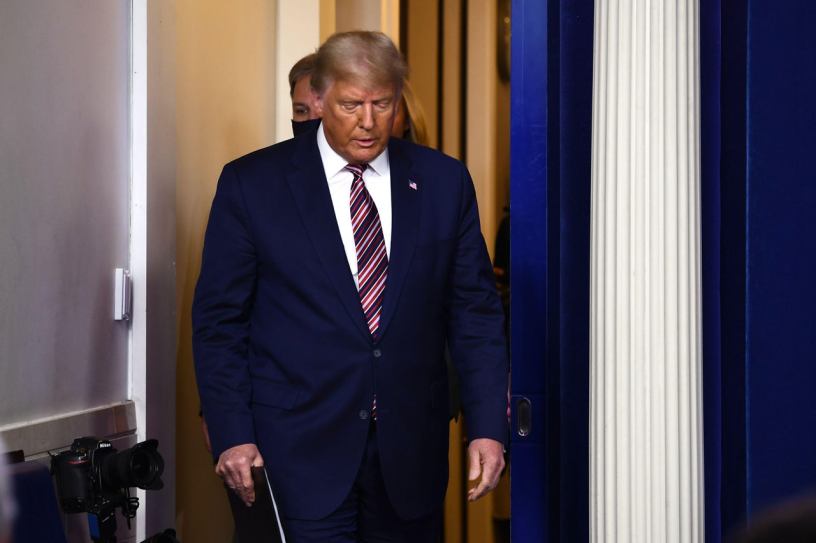
WASHINGTON DC – Despite most media outlets having called the election for president-elect Joe Biden, President Trump has refused to concede the election. Instead, what has ensued is a flurry of unsuccessful court cases and a general atmosphere of confusion in both the West Wing and Biden’s Transition team. Donald Trump’s refusal to concede is more significant than just another political squabble. Without a formal concession, the Biden team is unable to access the funds allocated to smooth over the process of changing administrations. More importantly, without the White House’s recognition, Biden has not received the intelligence briefings which incoming presidents usually receive.
Political pundits and experts are particularly concerned as the congressional 9/11 Commission cited the lack of intelligence briefings for President Bush and the protracted confusion of the 2000 election as key factors in US vulnerabilities which enabled 9/11. With the COVID-19 Pandemic surging to record highs across the country, political insiders and medical experts fear the potential repercussions delaying Biden’s access to intelligence briefings will have on fighting back the pandemic. Chief among these fears is the distribution of vaccines, which are expected to be widely distributed soon following the announcement of the above 90% efficacy rate for the Pfizer and Moderna Vaccines.
Joe Biden warned in his November 16th address that, “More people may die if we don’t cooperate.” These comments were bolstered by the public recognition of several Republican officials including Ohio Governor Mike DeWine. Despite these endorsements and private discussions of concession from within the West Wing, the president remains defiant in his yet to be proven assertions that the election was somehow fraudulent.
In addition to concerns over vaccine distribution, Trump’s refusal to concede has made difficult the usual foreign policy aspects of the presidential transition. Biden has been barred from using State Department resources, meaning that any congratulatory messages or other interaction he has with foreign leaders happens over private lines. Several former Obama administration officials have said that they have been asked by foreign state departments for help in contacting president-elect Biden.
Trump has, as of November 15th, shown a slight shift in his tone. In an early-morning tweet, the president stated that “[Biden] won,” but made clear that he had not conceded the election and the election was rigged. Moderate Republicans have pointed to this tweet as an example of the president starting to come to terms with the election results, but the president and his allies remain vehemently opposed to any suggestion of formal concession and start to a transition process.
While the Trump administration refuses to acknowledge the election results, the Biden team has made clear that they plan on pushing ahead regardless. When asked about his feelings about Trump’s actions, Biden called Trump’s refusal to concede an “embarrassment,” sharing similar sentiments to his former running mate Barack Obama, who described Trump as “denying reality.”
Though the Democrats have rallied behind Biden and Trump’s staunchest allies such as Lindsey Graham (R, S.C.) have yet to abandon him, there is general acknowledgment that none of the President’s challenges on the election will amount to anything, and on December 14th Biden will officially become President-elect. The question remains how long the president will continue to fight the results, and what will the Biden team do to prepare for a transition without the accustomed aid of the outgoing administration.
 The Global Monitor