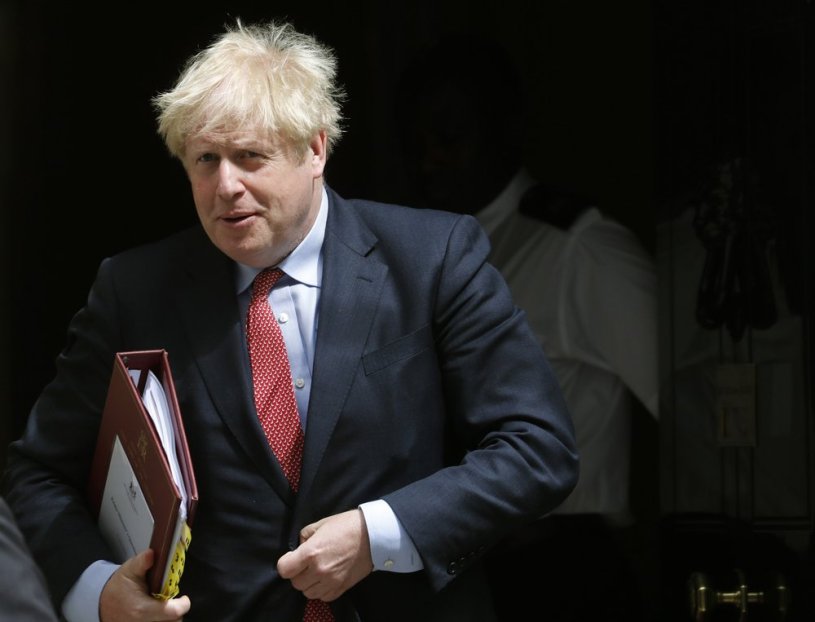
As Boris Johnson’s first one hundred days as Prime Minister of the United Kingdom come to a close, he is set to visit all constituent nations of the UK in an effort to strengthen ties between the four distinct regions. Johnson will begin in Scotland this week, specifically in an effort to bolster unionist sentiments. Polling suggests that Scottish independence is beginning to gain steam, increasing the possibility of a second referendum.
An online poll of Scottish adults, conducted by Panelbase for The Sunday Times, reveals that 54% of respondents would vote in favor of Scottish independence, with respondents under 55 years of age voting overwhelmingly in favor. Interestingly, 21% of respondents who voted against independence during the 2014 referendum are now backing the movement, a sizable number compared to the 6% who said they would vote for union even though they voted against it in 2014.
Even though Johnson proclaimed the Union as, “…the oldest, most successful political partnership in the world,” in a press conference on July 18th, an unnamed cabinet minister painted a grimmer image to The Times of London, describing Boris Johnson as “irritated” and Michael Gove, a cabinet member without a direct portfolio, in “panic mode”.
Scotland’s Long Fight for Independence
Scotland’s calls for a referendum are an echo of the past, whose history is rife with calls for stronger independence, culminating in a 2014 referendum on whether Scotland should remain a part of the United Kingdom. Scotland’s relationship with England began after the signing of the Acts of Union in 1707, creating the United Kingdom of Great Britain. It was until 1998, with the passage of the Scotland Act, that the relationship was amended significantly, granting Scotland a devolved assembly, the Scottish Parliament in Holyrood, Edinburgh.
Since 2007, the largest party in Holyrood has been the Scottish National Party. Fierce nationalists who have championed for Scottish independence, the SNP was able to negotiate with David Cameron’s Conservative government an independence referendum, held in 2014. After a bitter campaign, the results came in favor of union by a margin of 55% to 45%.
Though London has considered the 2014 results as conclusive, the SNP has continued to push for another referendum, especially after the referendum on European Union membership in 2016, which saw the UK vote in favor of leaving the bloc. Scotland voted overwhelmingly against leaving the EU, with 62% of Scots voting to remain, in contrast to the total 52% vote to leave. Since the referendum, Scottish independence began to gain steam again, with First Minister Nicola Sturgeon of the SNP carrying the charge for a second referendum on independence.
A YouGov poll on Scottish independence on the eve of the UK’s exit of the EU in early 2020 revealed that 51% of Scots favored independence, reflecting a sentiment expressed in the SNP’s gain of 13 seats in the 2019 general election, giving the SNP control of 48 of the 59 Scottish seats in Parliament. In May, an Ipsos Mori poll revealed that 65% of Scots wanted a second referendum in at most five years, with 34% saying that they preferred a referendum in two years.
Even though polling suggests that a second referendum is preferred by Scots, Downing Street has been strictly against the idea. After Sturgeon sent a letter to Johnson in 2019 requesting that Holyrood have larger powers in self-determination, Michael Gove instead encouraged Sturgeon to focus on other issues, like Scotland’s schools. In February 2020, the Johnson government spent five million pounds on advertising to keep the union together in Scotland in an effort to shift polling against independence.
Sturgeon Hailed For Covid-19 Respond; Johnson Lags Behind
In the same poll for The Sunday Times, it was revealed that only 21% of Scots approve of Johnson’s handling of the Covid-19 outbreak, compared to the 74% of respondents who approve of Sturgeon’s handling of the crisis. Like the European Union referendum, coronavirus is seen to be fueling cries for independence.
Though Scotland’s GDP has contracted by 20% since March, a pick up of 1.5% in May is showing Scotland is on the path to slow, but nonetheless important economic recovery. On top of that, an independent advisor to the Scottish and UK Parliaments said that Scotland was on track to beating the coronavirus.
Even though Scotland is also facing the worst unemployment crisis in five decades, Sturgeon’s strong approval rating stands in contrast to Johnson’s, which has taken a dip since the beginning of the crisis. The Times of London reports that as of early July, Johnson is at a net disapproval of 2%, with half of respondents disapproving of the Prime Minister.
Johnson, whose mandate was reaffirmed with a surprising win of an outright majority in the 2019 snap election, has seen his party’s approval also fall. The Labour Party, who recently replaced the unpopular Jeremy Corbyn with the former Shadow Brexit Secretary Keir Starmer as their party leader, has begun to pick up in polls against the Conservatives for the next general election. Johnson has been criticized for a hasty coronavirus response as deaths have risen to the highest in all of Europe and scandals regarding a top advisor have dogged down his approval.
Scotland’s calls for a referendum are most likely to be shut down by Johnson’s government and only time will tell whether Johnson’s efforts are proved effective.
 The Global Monitor