
Being home and, lets face it, bored, it is quite hard to not turn on the television and tune to the nearest news channel to hear updates about the disease currently ravaging the planet. But many news outlets and even prominent people spread rumors and cause a lot of misconception about Covid-19. In this article I teamed up with USC medical professor Dr. Ben LaBrot, to tell the real truth about the Coronavirus and why you should and shouldn’t worry about it.

First things first, what even is Covid-19? Covid-19 is a coronavirus, the 19 referring to the year of its start, 2019. Though there has been other coronaviruses, like SARS-CoV-2, an acute respiratory virus from the middle east spread in 2002, or MERS, none have caused a global pandemic on this scale. Covid-19 is a respiratory illness spread by droplets in the air from other infected people. Common symptoms range from a light cough and a fever to, on the worse side, acute respiratory illness and pneumonia. It is commonly compared to the flu, but here’s why thats a dangerous comparison to make. An individual with the flu infects an average of 1.3 people, meaning after 10 cycles of infection only around 56 people have the flu. But for Covid-19, which has an average rate of spread of around , after only 10 cycles over two thousand people are infected. Plus, Covid-19 is a lot more serious than the seasonal flu. As Dr. LaBrot explains,
“The seasonal flu’s mortality rate is known to be about 0.1% and for Covid-19 most agree that it is somewhere between 2–4% on average. This means that of ALL cases, serious or not, about 1 in 1,000 people infected by seasonal flu will die. But about 2–4 out of every 100 people infected by Covid-19 will die. That’s a big, big difference for something that spreads a bit more easily than seasonal flu.”

Now that you know how infectious it is, how is it spread? The actual understanding of transmission is incomplete, but the most commonly accepted theory is it is spread by the transmission of droplets. This means that when an infected individual sneezes, coughs, or even breathes, they eject tiny droplets of aqueous virus solution that, when come in contact with mucus membranes such as your nose, mouth, and eyes, will infect you. These droplets are estimated to be spread up to six feet away from an infected person, hence the six-foot quarantine. But, there is also another way for the virus to spread: through fomites. As Dr. LaBrot puts it,
“‘Fomites’ are objects that, when contaminated with germs (such as bacteria, viruses or fungi), can transfer disease to a new host. It could be a scalpel, phone, pencil, door handle, buffet serving spoon, a touch screen or light switch — anything a germ can live on long enough for sick people to contaminate it.”
When an infected person touches a surface, they leave a small amount of virus on the fomite which is still alive. When you then touch these fomites, then touch your face, or other mucus membranes you can contract the virus. It is commonly estimated that the virus can live up to two days on infected surfaces. So be conscious of what you touch when you have to make the eventual trip to the grocery store, the gas station, etc. So how can you prevent yourself, and others from getting Covid-19? Well, here is where the misconceptions really start to take hold. Dr. LaBrot and I were on a call when he showed me his phone and said,
“The surgeon general tweeted that masks won’t help around a month ago.. Now hes saying that we should wear masks every time we’re outside! So whats actually the truth?”
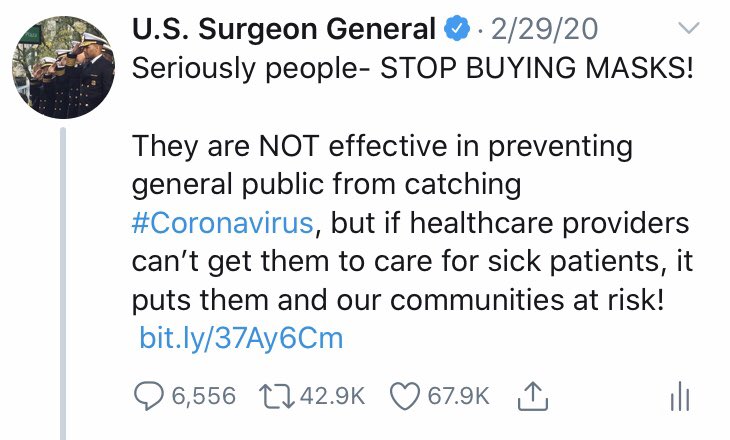
Here’s what you should do. According to many hospital archives and the CDC, to prevent yourself from getting it through droplets, wear something around you’re face, whether it be a bandana or an old shirt. The real N-95 respirators and surgical masks should be reserved for hospital use, because they are in active contact with people with the virus, and are currently in a massive shortage. Also, be sure to maintain that 6-foot distance between everyone, even just walking down the street. As many doctors put it, the key to prevention is acting like you yourself have the virus. Preventing infection through fomites is another story. As Dr. LaBrot puts it,
“We know face-touching is nearly impossible to just stop. People touch their face up to 20+ times an hour, for a variety of reasons: to manage our appearance, like makeup and hair, to communicate when talking, and to self-sooth”
The best way is to not touch any surface unless utterly necessary when outside. Always wear gloves when possible and wash your hands constantly, even if you haven’t touched anything. And most importantly, try you’re hardest not to touch you’re face, because that is the easiest way to get it. But even if you take all these precautions and still manage to get the virus, what then? The virus is nothing to freak out about. For the majority of people, it will just feel like a common cold, maybe a bit worse. But we’re not concerned as much about the young adult population getting it as much as the older generations of Americans. So if you do contract the virus, and are well enough to be at home, STAY INSIDE. It is easiest to spread the virus not when you have severe symptoms, but right as it starts. So the second you feel at all sick, self-quarantine away from you’re family, stay in bed, and most importantly do not go anywhere. The key to eradicating this virus is remaining vigilant and doing your duty to help those who are not as protected. Stay safe and stay healthy, and try not to get too caught up in all the rumors circulating about Coronavirus.

 The Global Monitor